Ethnic Cleansing
“Ethnic cleansing” describes the removal of an ethnic or national group from a territory through expulsion, intimidation, violence, or coercive policy. It is a grave accusation, but it is not a freestanding crime in the Genocide Convention. It usually appears as a descriptive or evidentiary category in discussions of war crimes, crimes against humanity, forced displacement, or genocide. Against Israel, the term is most often used in three ways: to describe the 1948 war and the Palestinian refugee crisis; to describe particular Israeli military actions, evacuations, home demolitions, or settlement policy; and, in its broadest activist form, to describe Zionism itself as a project of removal. Those uses are not the same claim. Each requires separate evidence, geography, period, agency, and intent.
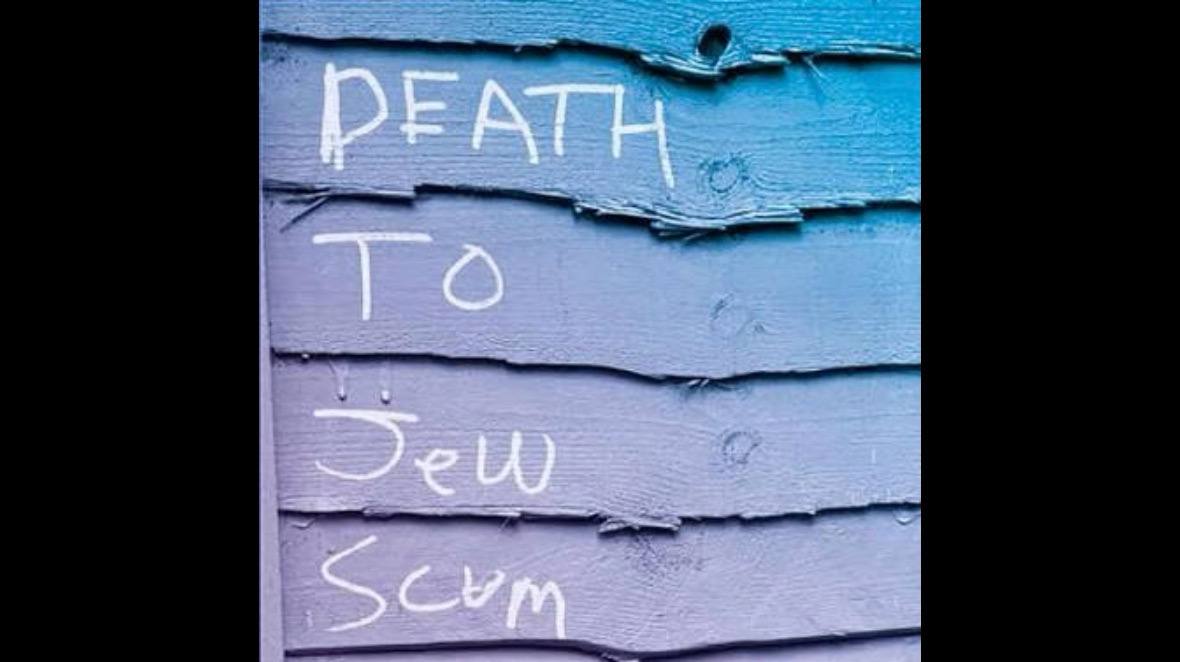
The phrase appears in campus activism, NGO reports, protest signs, social media captions, academic writing, and UN-related discourse. It often appears next to “settler-colonialism,” “apartheid,” “genocide,” and “Nakba.” In that setting it rarely functions as a narrow legal claim. It functions as a founding-state indictment: Israel is said to have been born through removal and to continue as a state by repeating removal. The accusation is especially common in discussions of 1948. It also appears in claims about East Jerusalem, the West Bank, Gaza, and Bedouin communities in the Negev. The danger is category collapse. A refugee crisis from a war, a military evacuation, a court-ordered demolition, a discriminatory planning regime, a population-transfer policy, and an exterminatory campaign are different things. They may be morally serious, but they are not interchangeable.
The implied meaning is that Israel’s legitimacy is permanently stained by an original crime. Once the phrase is accepted, later events are read as repetition: every checkpoint, evacuation order, military campaign, planning dispute, or land case becomes part of one continuous removal project. The phrase also shifts attention away from Arab rejectionism, the 1947 partition vote, the 1948 invasion by Arab states, Jewish refugee flight from Arab countries, and the fact that Israel retained a large Arab citizen population after the war. None of those facts erase Palestinian displacement. They do prevent the slogan from becoming a one-cause mythology.
The term “ethnic cleansing” entered international vocabulary during the wars in the former Yugoslavia in the early 1990s. It was used to describe campaigns of forced removal, intimidation, detention, killing, and destruction directed at changing the ethnic composition of territory. Applied to Israel, the lineage is different. The term was retrofitted onto the 1948 war and later folded into the anti-Zionist claim that Jewish sovereignty in any part of the land required Arab removal. Some historians, including Benny Morris and Ilan Pappé, have argued sharply different versions of the 1948 displacement story. Morris emphasizes war, local expulsions, flight, Arab orders in some places, Jewish military decisions in others, and no single pre-war master plan. Pappé frames 1948 as a planned campaign of ethnic cleansing. The glossary should name that dispute rather than pretend the evidence is uncontested.
“Ethnic cleansing” functions as a compression term. It takes a long conflict involving civil war, invasion, expulsions, flight, military necessity, atrocities, rejected compromise, and competing national claims, and compresses it into one moral image: a powerful Jewish state removing an indigenous people. It also turns policy criticism into existence criticism. If Israel is defined as an ethnic-cleansing project, then reforms, borders, elections, security guarantees, and negotiated compromise become secondary. The state itself becomes the problem. That is why the phrase so often travels with calls for dismantling Israel rather than changing Israeli policy.
Use the term only where the evidence fits. If the claim is forced displacement, say where, when, by whom, under what order, and with what intent. If the claim is unlawful demolition, say that. If the claim is settlement policy, say that. “Ethnic cleansing” cannot be used as a universal substitute for every Israeli action the speaker opposes.
The strongest response is not denial of Palestinian displacement. The strongest response is precision. 1948 produced Palestinian refugees and also Jewish refugees from Arab and Muslim countries. Israel accepted partition; Arab leaders rejected it and war followed. Israel did commit expulsions in some places; Arabs fled in others; some were told to leave; some were barred from return. That record is serious enough without turning it into a slogan that erases war, rejection, and Jewish vulnerability. A phrase that cannot distinguish between a massacre, a battlefield evacuation, a planning dispute, a border war, and the existence of Israel is not analysis. It is an indictment machine.