HASBARA
Hasbara is a Hebrew word usually rendered as explanation, explaining, or public diplomacy. In Israeli use it covers the efforts of the state and civil-society groups, of diplomats and soldiers and students and ordinary citizens, to explain Israel’s position to outside audiences. There is nothing inherently sinister in it, because every state explains itself. The antizionist slur begins at the moment explanation is treated as deception by default. In hostile usage, hasbara works as a dismissal. The word is deployed to brand any pro-Israel correction, any Jewish testimony, any Israeli source or historical fact as propaganda before its content has been examined at all. A student cites Hamas’s charter, and the answer is hasbara. A journalist notes rocket fire from civilian areas, and the answer is hasbara. A Jew describes fear after October 7, and the answer is hasbara. The word ends the discussion without anyone having to disprove a thing.
That is the heart of the problem, and it has to be separated from a legitimate one. Ordinary skepticism toward government messaging is fair, and Israeli officials and institutions can be challenged like any other state actor. The antizionist use of hasbara goes further than that. It treats Israeli speech as uniquely deceptive and Jewish speech about Israel as presumptively fake, instructing the listener to distrust the speaker first and the evidence second. Used that way, the term exposes no propaganda. It issues a permission slip for ignoring the Jewish side of the record.
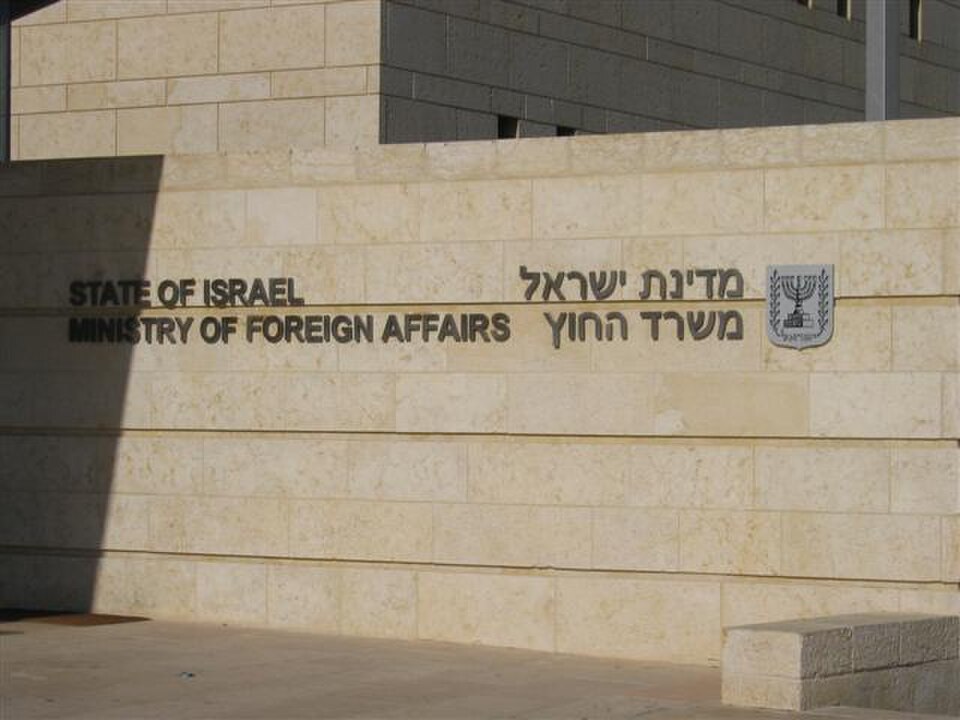
The word turns up constantly in social-media replies and protest literature, in campus debate and commentary about Israel. In hostile settings it is usually an epithet—cheap hasbara, Zionist hasbara, hasbara troll, hasbara bot, paid hasbarist. These phrases rarely mean “this source is unreliable for the following reasons.” They mean “this source is Israeli or pro-Israel, so it can be ignored.” The pattern grew especially visible after October 7, when documentation of Hamas atrocities, hostage abuse, rocket fire, tunnel systems, and sexual violence was routinely waved away online as hasbara. The United Nations mission led by Pramila Patten reported in March 2024 that there were reasonable grounds to believe conflict-related sexual violence occurred during the October 7 attacks, including rape and gang rape in at least several locations, and clear and convincing information that hostages had been subjected to sexual violence. Israel’s Foreign Ministry then directed its embassies to promote the report. That sequence handed critics the opening they wanted, but using Israel’s publicity campaign as a reason to dismiss the underlying UN findings is precisely how the word operates as a shield. The campaign and the findings are not the same thing, and the slur depends on pretending they are.
Matti Friedman’s writing on international media coverage gets at the assumption underneath the slur. He wrote less about hasbara as a chant than about the prior belief that Israeli explanations are inherently less credible than the claims of Israel’s enemies. In his 2014 Tablet essay he described how major outlets over-cover Israel, under-cover Palestinian agency, and frequently omit facts that complicate the standard account. His point was not that every Israeli statement is true. It was that a public culture which assumes Israel is always lying, while granting its enemies the language of grievance, has decided the case before any evidence arrives.
When hasbara is used as a slur, the implication is that Jews and Israelis never speak from conviction or evidence, from memory or lived experience. They speak, supposedly, because they have been trained, bought, manipulated, or mobilized by a state. That implication is gravest when aimed at diaspora Jews, because it recasts a Jewish student’s grief, a rabbi’s public statement, a hostage family’s testimony, or a scholar’s correction as foreign messaging. What results is not ordinary media criticism but a suspicion machine, in which the speaker’s Jewishness or Zionism or connection to Israel becomes the reason not to listen. The shape of that suspicion is old. In earlier antisemitic language, Jews were said to act through hidden coordination, dual loyalty, financial influence, or secret control. The hasbara slur updates the pattern for the internet. Rather than saying Jews control the press, the speaker says Jews are performing hasbara; instead of claiming Jews take orders from a foreign power, the speaker calls them state propagandists. The vocabulary is newer, the suspicion is not. This is also why the term so often travels with talk of bots, paid trolls, and foreign agents. Some states do run online influence operations, and Israel’s own public diplomacy deserves scrutiny when it uses contractors, undisclosed campaigns, or official messaging. The hostile use erases the line between a government campaign and a Jew with an argument, and once that line is gone, Jewish public participation can be treated as a hostile operation.
The word’s Zionist history predates the state. Gideon Kouts traces the formal entry of hasbara into Zionist vocabulary to Nahum Sokolow, and later scholarship describes it as Israel’s public diplomacy, a state and civic effort to explain the country to foreign audiences. Israeli writers themselves have long argued over whether the country has a “hasbara problem,” whether its explaining is too defensive, and whether public diplomacy can repair a policy dispute or only present it more skillfully. That internal debate matters, because it shows hasbara is not an invented antisemitic fantasy. It names a real Israeli habit of explanation and a real state practice, complete with official spokespeople, public-diplomacy units, military communications offices, and diaspora-facing programs.
The hostile use belongs to a separate lineage. Soviet anti-Zionist propaganda after 1967 depicted Zionism as a worldwide apparatus of deception, racism, imperialism, and manipulation. Yuri Ivanov’s Caution: Zionism!, first published in Russian in 1969 and then circulated in translation, became one of the foundational texts of that campaign. Izabella Tabarovsky notes that Soviet messaging treated Zionism as a vast hidden force and exported the language through state publishing houses, front groups, and international networks. Today’s casual hasbara insult inherits part of that mood: Israel is not only arguing, it is deceiving; Zionists are not merely wrong, they are agents.
In antizionist settings the function of the word is to stop a fact from becoming audible. It lets the listener reject evidence without reading it. A document can be public, a source primary, a photograph verified, a quote exact, and the answer can still be hasbara, because the label moves the argument away from the truth of the claim and toward the suspected impurity of the speaker. It also shields anti-Israel claims from correction, since challenges to casualty figures, legal claims, maps, slogans, or historical statements can all be dismissed the same way. That gives weak claims unusual protection. They no longer have to survive scrutiny; they only have to sit on the favored side of the argument. And the word isolates Jews in public life, telling non-Jewish audiences that Jewish testimony about Israel is suspect, telling Jews that their grief and fear and memory will be treated as scripted, and telling institutions that anti-Jewish harassment can be relabeled as opposition to propaganda.
There is a clean line to hold here. Hasbara is not always a slur; in Hebrew and in pro-Israel contexts it often just means public diplomacy or advocacy. Government messaging does deserve scrutiny, and the problem is never skepticism toward Israeli officials—it is the reflex of treating every Israeli or Jewish correction as deception by default. The word turns antisemitic when it converts diaspora Jews into presumed agents of Israel, above all when the subject is Jewish safety, October 7, the hostages, antisemitism, or Jewish historical connection to the land. The existence of official Israeli public diplomacy does not make ordinary Jews state propagandists. The strongest answer to the slur is procedural: ask what specific claim is false, which source is unreliable, and what evidence would change the speaker’s mind. If no evidence could change it, hasbara was never a critique. It was a refusal to hear.