ANTIZIONISM, OCTOBER 7, 2023–PRESENT
Modern antizionism names something profoundly different from the philosophical and social movements that preceded it. The October 7, 2023 Hamas massacres in southern Israel, which killed over 1,200 people, the majority of them civilians, and took 251 hostages, did not produce the modern movement: it revealed exactly how strong its latent potential was. This potential had been enormously underestimated, and due to the lopsided understanding by which Western populations saw Jew-hatred only as a right-wing problem, many were not expecting the enormous waves of antizionist protests that followed. This demographic tends to view Muslim and Arab groups as victims in society—an understandable sentiment following post-9/11 Islamophobia—and because of this and other factors, they were prime social real estate to take up what they consider an important “political” cause against Israel. What October 7 did was activate those hidden mechanisms, transforming decades-long efforts into a highly visible mass phenomenon. The attacks were absorbed into the symbolic world not as an atrocity, but as an act of resistance and liberation—the logical outcome of a perspective that already characterized Israel as a sinister, illegitimate state. It demanded the complete dissolution of the state itself, and crossed lines into openly excusing the slaughter of civilians. It continues to do so.
Antizionism can be quite difficult to define, especially since people tend to view it as just another iteration of antisemitism. The focus here is its American and Western form. Izabella Tabarovsky says antizionism “speaks of Israel as a racist, imperialist, and colonialist state; equates it with Nazi Germany and apartheid South Africa; disparages Jews for having turned into oppressors.” Shaul Kelner describes it as the “Othering of Jews from the American left.” He calls it a “political mass movement defined not by abstract ideas but by lived praxis” that “finds its social base in the educated, urbanized professional class.”
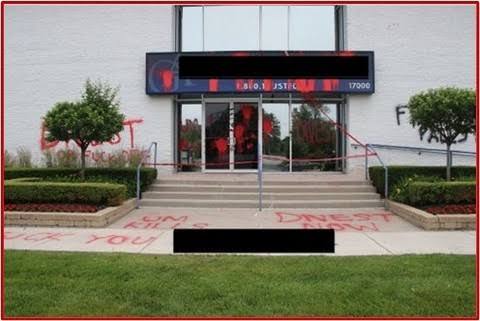
This lived praxis, he says, is seen when “demonstrators pitch tents, wave flags, chant slogans, block walkways, storm libraries, and confront Jews…occupations of university spaces, boycotts of Israeli scholars, masked harassment of Jewish students, defacement and destruction of Jewish property, disruption of performances by Jewish musicians.” Naya Lekht describes it quite clearly: “Anti-Zionism is a structural form of Jew-hatred, one that reproduces the Jew as villain through the delivery mechanism of anti-Zionist libels.” My position is that all of these are correct. Modern antizionism is a social movement whose praxis involves encampments and protests, targets Jews, and seeks the destruction of Israel using ideas and language influenced by Soviet, Arab, and Western leftist caricatures of Zionism and Israel. It functions by using libels like genocide, apartheid, colonizer, ethnostate, and imperialist to ostracize Jews and delegitimize Israel. It is a sui generis form of Jew-hatred that casts Jews and Israel as white, powerful, racist, and guilty.
Since October 7, this movement has operated through a repertoire that defines itself with the utmost, dogmatic confidence. Encampments occupied university spaces across the United States and Europe in spring 2024, combining tent cities, masked demonstrations, and the severe harassment of Jewish students. Faculty open letters, signed by hundreds of academics at major research universities, portrayed the Hamas attacks as legitimate resistance and Israeli operations as genocide. Student government resolutions passed across North America and Europe called for strict boycotts of Israel. Professional associations in anthropology, linguistics, and other fields advanced boycott measures against Israeli scholars.
Municipal governments in several cities passed resolutions designating Israel an apartheid state. The word genocide circulated as a foregone conclusion in spaces where it had never been applied in any ongoing conflict for a country historically allied with America. Protest slogans including “Globalize the Intifada” and “By Any Means Necessary” circulated in quads and professional conferences—settings where their implications for Jewish safety were casually dismissed. The drive was sustained not by argument, but by practice: by the accumulated weight of boycotts, exclusions, university disruptions, and symbolic performances of solidarity. The antizionist movement was built through marking and isolating an Other.
Antizionism during our time is used as a closed system of outward indictment. It constructs a symbolic version of Zionism as the axis of global injustice, a position in which every available crime converges in the image of Israel, and deploys words like genocide, apartheid, and settler-colonialist not to clarify specific claims, but to condemn. It aggressively ignores any challenges, and prefers a loudspeaker to a podium. The central mechanism is libel by repetition: judgments circulate without serious evidence until they produce the appearance of incontestable reality. Proponents claim their target is a political program, not a people, though it is directed at the only Jewish-majority country in the world. The sheer happenstance of this fact is an overdose of serendipity. In other words, while antizionism is not identical to antisemitism, it is definitely antisemitic.
The hostility that erupted publicly after October 7 did not originate on October 7. Its vocabulary was manufactured by Soviet state propagandists in the 1960s, distributed through front organizations across the Third World and Western left, formalized at events like the 2001 Durban Conference, absorbed into post-colonial academic theory, and pushed through boycott campaigns across Western civic life over the following decades. The specific words in circulation were not arrived at independently by the students and faculty who used them in 2023 and 2024. They inherited a transmission chain running from Soviet Zionologists, the Non-Aligned Movement, the Durban Conference, leftist circles, and postcolonial publishing. What October 7 added was not new vocabulary or a new argument. It added terrifying urgency and scale and collapsed whatever inhibitions had previously kept the movement’s lesser angels out of the academy. The genealogy, running from the Grand Mufti’s wartime collaboration with Nazi leadership through Soviet state propaganda against Zionists and Islamist organizing and postcolonialism, crossed aesthetics and borders repeatedly without changing its object. Each transfer repackaged the same libels in whatever language the receiving culture found most compelling.
Antizionism in our period works as a type-of exclusionary ritual dressed in the language of inclusion. Words like decolonization, anti-racism, and solidarity operate as currencies within universities and cultural hubs, conferring legitimacy on those who use them while enforcing conformity on those who disagree. Jewish students who expressed grief after October 7 found themselves socially isolated, professionally penalized, or physically confronted by peers. Jewish faculty who declined to sign open letters viewing the Hamas attacks as legitimate resistance reported being told their continued participation was unwelcome. The movement, which has grown exponentially since October 7, shares a language with the pre-state philosophical tradition and with post-1948 Soviet and Arab histories. However, it is distinguished from both by its members’ demographics, its organizational reach, and the speed with which it moves. Kelner notes that its social base is the educated professional class, the same demographic that most Jewish Americans inhabit—which means Jewish people are more likely to encounter it in professional settings than the overtly racist antisemitism Jews had as their main threat for quite some time. This reach produces very real, tangible discrimination in sectors where its targets work and organize.
It primarily expresses itself through three ubiquitous vilifications of Israel: “colonizer,” “apartheid,” and “genocide.” It treats these allegations as a fait accompli. The gap between the immense weight of the accusations and the bar they have not met is a defining feature of modern antizionism. It is a system of judgments delivered before a case is made, rationalized circularly through the same accusatory fiat it assumes, and spread through repetition, loaded language, and emotional fervor. Its endpoint is not reform, criticism, or coexistence, but a world emptied of Jewish statehood.