Ceasefire Now
“Ceasefire Now” is the demand that Israel immediately stop military operations, especially in Gaza. In the antizionist vocabulary that surged after October 7, 2023, the phrase does not function as an equal command to all armed actors. It is directed at Israel, assumes the worst of Israeli intention, and treats Hamas, Palestinian Islamic Jihad, and other terrorist organizations as background conditions rather than active authors of the war. The slogan compresses a complex battlefield into a single accusation: Israel is fighting, therefore Israel must stop. The phrase gains power from moral simplicity. It sounds like the whole of compassion in two words, but it usually omits the conditions that would make a ceasefire anything more than Israeli exposure. It does not require the immediate release of hostages, the end of rocket fire, the disarmament of Hamas and Palestinian Islamic Jihad, or the dismantling of tunnel networks under civilian life. It asks Israel to accept the burden of restraint while leaving the terrorist structure that produced the war largely intact.
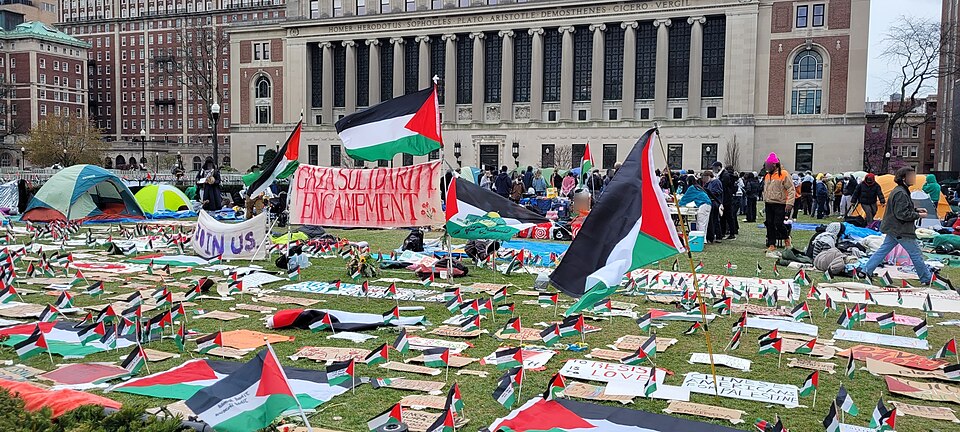
“Ceasefire Now” appears on protest signs, campus statements, petitions, clergy letters, social media graphics, municipal resolutions, and NGO campaigns. It is presented as the obvious humanitarian demand, as though the only moral alternative to the slogan were indifference to civilian suffering. In practice, the demand is aimed overwhelmingly at Israel and at governments that support Israel. Hamas is rarely named with the same urgency, and Palestinian Islamic Jihad almost disappears from the moral frame altogether. The slogan does not usually mean: release the hostages now, stop firing rockets now, stop embedding weapons in civilian areas now, or stop using hospitals, schools, mosques, homes, and tunnels as instruments of war now. Those commands would make the demand reciprocal, concrete, and enforceable. Instead, “Ceasefire Now” turns Israeli self-defense into the visible offense and terrorist violence into the surrounding atmosphere. The result is a protest language in which Israel has agency, guilt, and obligation, while Hamas has grievances, context, and excuses.
The implied meaning is that Israeli force is the central obstacle to peace. The phrase assumes that civilian suffering flows primarily from Israel’s decision to fight, not from Hamas’s massacre, hostage-taking, rocket attacks, command tunnels, and deliberate militarization of civilian space. It shifts attention away from the fact that Israeli civilians were murdered, kidnapped, burned, raped, hunted, and rocketed before the war became an international slogan. The chronology is not forgotten by accident; it is morally rearranged. “Ceasefire Now” also implies that Israel must obey the laws of war while its enemies are treated as if they stand outside the same judgment. Israel is scrutinized for proportionality, distinction, warnings, targeting, investigations, and restraint. Hamas and Palestinian Islamic Jihad are denounced far less often for the tactics that make civilian harm more likely: hostage-taking, indiscriminate rockets, tunnel warfare, human shields, and military operations inside or beneath civilian sites. The terrorist actor becomes scenery, while the Jewish state becomes the accused.
After October 7, “Ceasefire Now” entered mass protest culture as a moral accusation against Israel. Its rhetorical strength came from the fusion of two ideas: the humanitarian appeal of a ceasefire and the impatient command of “now.” That combination allowed activists to sound procedural while issuing a verdict. The phrase did not ask what kind of ceasefire, enforced by whom, under what conditions, or with what consequences if Hamas broke it. The slogan belongs in antizionist vocabulary because it reorganizes blame. It does not merely call for the end of fighting; it recasts the war as a story of Israeli aggression and Palestinian victimhood while minimizing the terrorist system that caused, prolonged, and exploited the war. It erases the many times Israeli civilians have been placed under rocket fire after lulls, pauses, withdrawals, understandings, and prior ceasefire arrangements. It turns Israel’s refusal to leave Hamas standing into cruelty, while treating Hamas’s refusal to stop attacking Israel as expected behavior.
The function of “Ceasefire Now” is to make Israeli restraint the test of morality. It moves the public question away from the defeat of Hamas and toward the limitation of Israel. It pressures the side accountable to law, courts, allies, journalists, and public scrutiny, while placing little effective pressure on the side that murders civilians and then hides among civilians. This is why the slogan works so efficiently: it burdens the state that can be shamed and shields the terrorist movement that cannot be embarrassed into decency. The slogan also turns the future into a blank space. It asks Israel to stop before answering who frees the hostages, who prevents rearmament, who dismantles the tunnels, who stops the rockets, who removes Hamas from power, and who protects Israeli civilians when the next attack is prepared. A ceasefire that leaves Hamas intact is not an end to violence; it is a pause in which violence can be reorganized. The demand therefore operates less as a peace plan than as pressure for Israel to accept danger in the name of someone else’s moral performance.
A ceasefire without enforcement is not peace. If Hamas retains its weapons, command structure, tunnel network, hostage leverage, and ideological commitment to Israel’s destruction, then the ceasefire protects the conditions for the next war. This is not speculation but the lesson of repeated conflict with Gaza-based terrorist organizations. The question is not whether quiet is desirable, but whether quiet bought by Israeli vulnerability is sustainable or moral. The most revealing omission in “Ceasefire Now” is not only Hamas but law. Hamas and Palestinian Islamic Jihad are bound by the laws of armed conflict, yet activist language often treats them as if legal categories apply only to Israel. The prohibition on targeting civilians, the prohibition on hostage-taking, the prohibition on human shields, and the duty to distinguish military objectives from civilian life do not disappear because a group calls itself resistance. A slogan that cannot say this clearly is not defending civilians; it is selecting which civilians count.
The answer to “Ceasefire Now” is conditions. Release the hostages, stop the rockets, disarm Hamas and Palestinian Islamic Jihad, dismantle the tunnels, end the use of civilian sites for military cover, and recognize that Israeli civilians have the same right to live without massacre, kidnapping, and rocket fire as anyone else. Any demand that omits those conditions is not a serious formula for peace. It is a demand that Israel stop while the causes of war remain armed and waiting. The slogan should be judged by what it leaves standing. If Israel stops and Hamas survives, the terrorist organization can claim victory, rebuild, rearm, police Gaza, intimidate Palestinians, and prepare another attack under the protection of the last one’s outrage. That is not compassion for civilians; it is the recycling of war through sentimental language. Without surrender, disarmament, hostage release, and enforceable guarantees for Israeli security, “Ceasefire Now” means Israel stops, Hamas remains, and the next war is already being prepared.