CHILD KILLERS
“Child killers” is an antizionist slogan that casts Israel, Israelis, Zionists, or Jews as a group as the deliberate murderers of Palestinian children. It surfaces in chants and placards, in social media posts and NGO materials and the media’s handling of war casualties. The phrase usually travels with photographs of dead or wounded children and casualty figures stripped of their battlefield context. It is built to end an argument before it can begin. That is its purpose and its power.
The slogan is not false because no children have died. Children have died in Gaza, and their deaths are a horror that this entry does not minimize. The problem lies in the leap from death to intent. “Child killers” does not claim that Israeli strikes caused civilian deaths, or that a particular strike was unlawful, or that a commander skipped a feasible precaution. It claims the purpose was child murder. That is a wholly different assertion, and it demands evidence the slogan never supplies.
The words also sit inside an older story, whether or not the speaker knows it. Karolina Placzynta analyzes modern child-murder claims about Israel as part of the ritual-murder tradition, citing examples that portray Israelis as habitually or even joyfully killing children. Abraham Foxman made a similar point about earlier Gaza-war rhetoric, calling the phrase a sanitized blood-guilt charge. The claim is not that everyone who uses the phrase consciously means medieval imagery. It is that the words place Jews and the Jewish state inside a centuries-old pattern in which Jewish evil is proven by the murder of the young. That inheritance is what gives the modern slogan its extra charge.
The phrase moves through both street protest and institutional channels. In November 2024, the British surgeon Nizam Mamode told the UK House of Commons International Development Committee that he had seen children with single gunshot wounds to the head and concluded they were “clearly deliberately targeted by Israeli snipers.” The Israeli Embassy in London later challenged parts of his testimony, saying some claims rested on hearsay and calling the allegation of IDF fire on children and uninvolved civilians baseless. That exchange captures the central problem in miniature. A grave charge of intentional child-killing can travel through a parliamentary committee before the underlying evidence has been tested at all.
There is also a documented bridge from anger at Israel to abuse of Jews. The Community Security Trust recorded 542 antisemitic incidents in Britain during July and August 2014, and 48 of them used phrases like “child murderers” or “baby killers” against British Jews, synagogues, and other Jewish targets. CST’s separate discourse report ranked the child- and baby-killer theme as the second most common in antisemitic incidents over that period. So this is not a speculative worry about where the language leads. The record shows it crossing, in real cases, from protest over Israeli military action into direct harassment of Jews who had nothing to do with it.
Since October 7, 2023, the language has filled campus protests, street demonstrations, and social media campaigns. It clusters near “genocide,” “baby killer,” “murdering children,” and “Zionists kill children.” These forms are potent precisely because they are short and visual and impossible to rebut in the moment. A person branded a supporter of child murder is not being invited into a discussion. He is being marked as someone decent people are expected to shun.
The target is often not the Israeli state at all. At Baruch College in 2024, anti-Israel student groups went after Hillel, the main address for Jewish student life on campus. Hillel at Baruch’s own news page described a demonstration in which protesters said the Jewish campus group was murdering children and backing fascism and genocide. That example matters because the object of the charge was neither the Israeli military nor an Israeli ministry. It was a Jewish student organization in New York, held to account for a war thousands of miles away.
The slogan also draws on more respectable-looking sources. The New York Times’ May 2021 feature “They Were Only Children” placed the photographs and names of children killed in that month’s Gaza fighting into a format normally reserved for memorial. Whatever the editors intended, the presentation handed readers a child-centered account in which the military setting and the conduct of Palestinian armed groups receded into the background. Antizionist groups then borrow that same grammar for blunter ends: Israel murders children, Zionists support it, and Jews who will not denounce Israel are complicit. The progression is the engine of the whole thing. Real grief over dead children hardens into a settled judgment about Israeli intent, and once that judgment sets, Jews far from the battlefield can be treated as answerable for the deaths.
The implied claim is that Israeli operations target children as a matter of policy. Under international humanitarian law, proving that would require evidence that specific attacks were aimed at children as civilians instead of at lawful military objectives. It would further require evidence that the child deaths were intended, not incidental harm to be weighed under the rules of distinction and proportionality and precaution. The slogan shoulders none of that burden. It treats intent as established by the presence of dead children alone, collapsing a dozen separate questions into one—how many children died, how the figures were counted, whether the dead were fully identified, whether militants were folded into the totals, what target was under attack, whether armed groups were operating nearby, whether warnings went out, and whether the expected civilian harm was excessive against the military advantage anticipated.
Casualty data sits at the center of this. The Associated Press analyzed Gaza Health Ministry figures in June 2024 and reported that the ministry belongs to the Hamas-run government, does not separate civilian from combatant deaths, and publishes daily totals higher than its own fully identified underlying records. The AP also found that the share of women and children among fully identified deaths fell over time, from 64 percent in October 2023 to 54 percent by April 30, 2024, with women and children making up 38 percent of newly and fully identified deaths in April alone. The reality of civilian death is not in question. It does show why certainty built on a chant is not serious enough for a claim this grave. Abraham Wyner’s March 2024 statistical critique raised a narrower concern, noting that the totals for an early qreporting window rose with a linearity he found unlikely in active urban warfare.
The slogan also erases Hamas from the battlefield it helped create. Hamas embeds military assets in dense civilian areas, operates from tunnels and civilian surroundings, and gains, in the cruelest sense, when Israeli strikes produce images of civilian suffering. None of that relieves Israel of its own legal duties. It does mean that child deaths in Gaza cannot be discussed honestly while leaving out the armed group that chose to fight from among Gaza’s civilians. A phrase that names only one party to a two-sided battlefield is not an analysis. It is a selection.
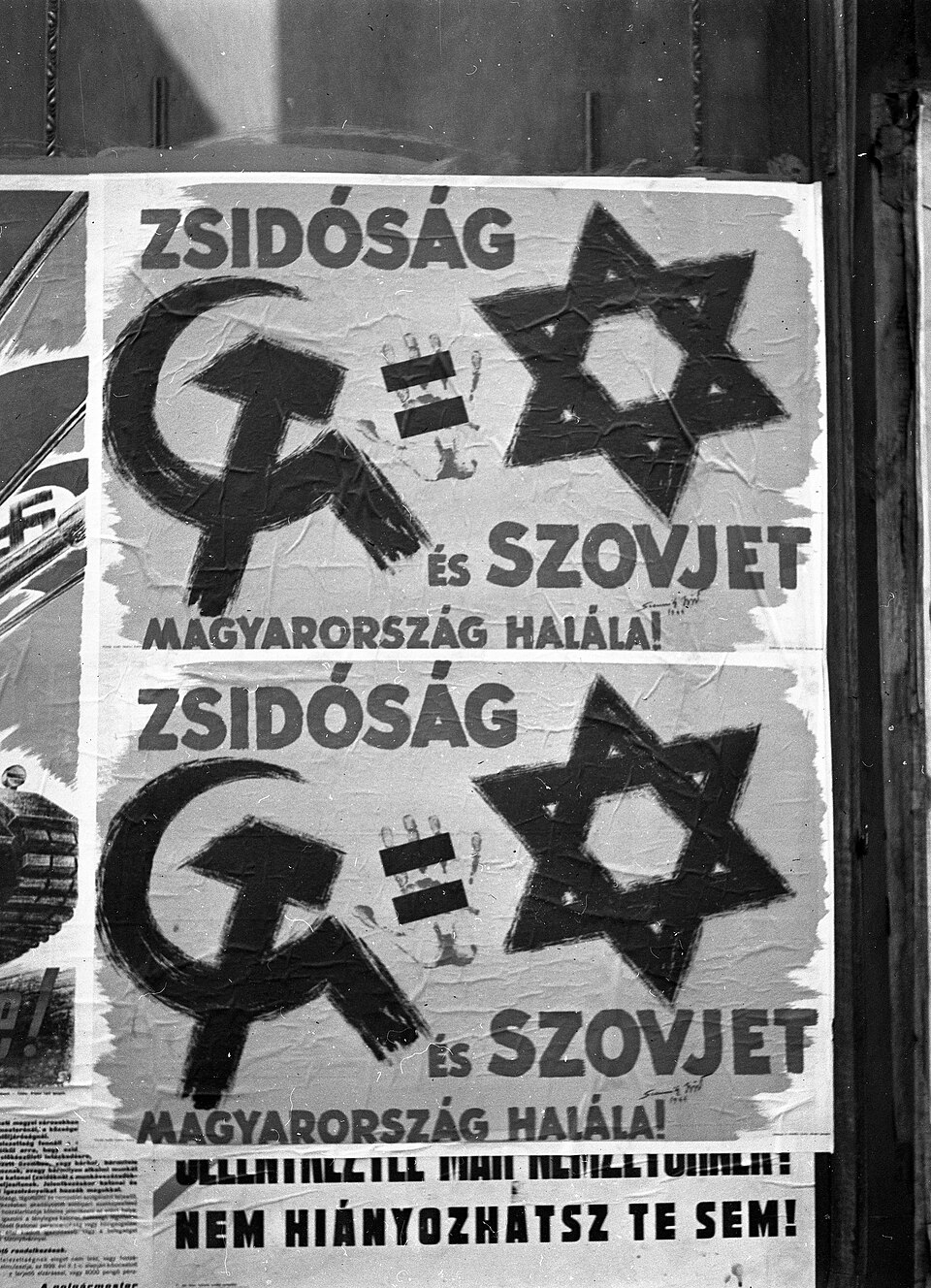
The lineage of the charge runs deep into anti-Jewish history through the ritual-murder myth, which falsely held that Jews killed Christian children for ritual use. The United States Holocaust Memorial Museum identifies William of Norwich in 1144 as the first medieval European case and notes that blood libels became a major theme of Jewish persecution across the continent. The myth often surfaced around Passover and could trigger pogroms and trials, executions and expulsions. Hugh of Lincoln produced another English version in 1255, and the 1840 Damascus Affair carried the myth into the Middle East when the disappearance of a Christian monk led to the torture of Jewish leaders and an international crisis. The 1903 Kishinev pogrom was fueled in part by press claims tying Jews to a Christian child’s death, and the 1928 Massena incident in New York showed the myth could surface even in America, when officials questioned a rabbi after a child went missing—before she was found unharmed.
The myth was modernized in the twentieth century by the worst hands available. The Nazi paper Der Stürmer devoted its May 1934 issue to ritual murder, and in 1983 the Syrian defense minister Mustafa Tlass published The Matzah of Zion, presenting ritual murder as historical fact. None of these cases named particular Jews for proven acts; each attached child murder to Jews as a people. The antizionist version swaps Israel for the Jewish community and wartime child casualties for ritual murder. The specifics differ, and the difference is real. The underlying pattern does not change, because it still rests on collective guilt, slain innocence, and the notion that Jews or their state carry a special cruelty toward children.
In practice the phrase turns the conflict into a test of personal purity. Accept the slogan and you stand with the compassionate; ask for evidence or context or legal specificity and you can be cast as a defender of murdered children. That is what makes it so useful in protest, where the aim is often isolation, not inquiry. It also shifts the subject from conduct to identity. A lawful-war analysis asks what happened in a given strike—the target, the intelligence, the warning, the expected civilian harm, the military advantage, the alternatives, the after-action review. “Child killers” does none of that work. It names an enemy and pronounces him depraved.
Aimed at Jews, the phrase assigns collective guilt. A synagogue or a Hillel chapter, a Jewish student or an Israeli speaker or a Jewish-owned business can all be treated as stand-ins for the Israeli state. This is why the precise wording matters so much. It does not stay fixed to Israeli decision-makers; it follows Jews into schools and shops, onto streets and campuses, and up to the doors of communal buildings. And by treating dead children as self-evident proof of Israeli child-murder, it also closes the file on Hamas. The tunnels and command posts, the rocket-launch sites and hostage-holding locations and the concealment of fighters among civilians all fade to background, while one side’s conduct is made to carry the entire weight of blame and the other side’s choices vanish from the page.
None of this places Israeli conduct beyond question. Children dying in war is a horror, and some strikes may prove unlawful when the facts are examined. The narrow, firm point is that grief is not a finding and a chant is not evidence, and that intent still has to be shown, not assumed from the casualty count. When “child killer” is shouted at a synagogue or a Jewish student, the charge has already left the realm of one strike or one minister and become an assignment of blood guilt. And any honest account of child deaths in Gaza has to include Hamas’s decision to fight from within civilian life, which constrains Israel’s options without erasing its duties, and which the slogan is engineered to keep out of view.