IMPERIAL STATE
“Imperial State” is an antizionist label that casts Israel as a regional hegemon reaching for dominion beyond its recognized borders—through force and settlement, intelligence operations, and its alliance with the United States. The term borrows the vocabulary of empire and pins it on a country of roughly ten million people living in a hostile security environment. Its suggestion is simple: Israeli action is never defensive or retaliatory or deterrent. It is rule. The word can do honest academic work when writers analyze settlement, occupation, statehood, or the long shadow of European empires in the Middle East. It turns into antizionist shorthand when it treats the Jewish state itself as an imperial entity whose power is illegitimate by nature. In that use, Israel stops being a state with disputed borders and severe security threats and becomes a miniature empire whose very survival is said to depend on domination. The label is often welded to the “Greater Israel” story—the claim that Israel secretly covets territory from the Nile to the Euphrates. Real maximalist currents do exist on the Israeli far right, and there are real disputes over annexation and settlement in the West Bank, and those should be named directly. None of that proves the Nile-to-Euphrates version is the actual program of the State of Israel. Hostile propaganda turns ordinary policy disputes into a hidden blueprint for conquest.
Nur Masalha’s Imperial Israel and the Palestinians: The Politics of Expansion (2000) gave the term a scholarly shape by arguing that Israel’s post-1967 conduct toward Palestinians revealed expansionist tendencies, and Maxime Rodinson’s earlier Israel: A Colonial-Settler State? (1973) set Zionism inside a broader history of European settlement. Those works form part of the intellectual backdrop. In current usage, though, “imperial Israel” usually means more than a historical or legal thesis. It is used to fold targeted killings and strikes against Hezbollah, operations in Gaza and settlement growth, normalization agreements and intelligence reach and U.S. aid and border enforcement all into one project. In November 2025, New York Times reporting by Roger Cohen and David Guttenfelder ran under the headline “‘Imperial Israel’ in the New Middle East,” which shows how far the label has traveled from activist and academic circles into elite journalism.
The term also carries a contradiction common in anti-Israel rhetoric. Israel is described as an American outpost and, at the same time, as the hidden hand directing American policy—subordinate to empire and commanding empire at once. Both claims cannot be true in the same way. Their comfortable coexistence is exactly what makes the label useful, because it lets Israel appear dependent and omnipotent together, small and world-shaping, local and global. A word that can mean a thing and its opposite is doing rhetorical work, not descriptive work.
To call Israel imperial is to ask the reader to read nearly every Israeli use of power as domination. Security zones become colonies, deterrence becomes expansion, strikes on armed groups become regional rule, and peace treaties become tactical pauses. Once that premise is in place, even Israeli withdrawals stop counting against the thesis and get recast as temporary maneuvers inside a larger plan. The historical record is harder to bend. Israel returned the entire Sinai Peninsula to Egypt under the 1979 peace treaty and completed the withdrawal in 1982. It withdrew from southern Lebanon in 2000, a withdrawal the UN Secretary-General reported as completed in line with Security Council Resolution 425. It dismantled every Israeli settlement in Gaza during the 2005 disengagement. None of this resolves the West Bank, East Jerusalem, Gaza’s legal status after 2005, or the lawfulness of later operations—but the plain empire thesis cannot account for any of it.
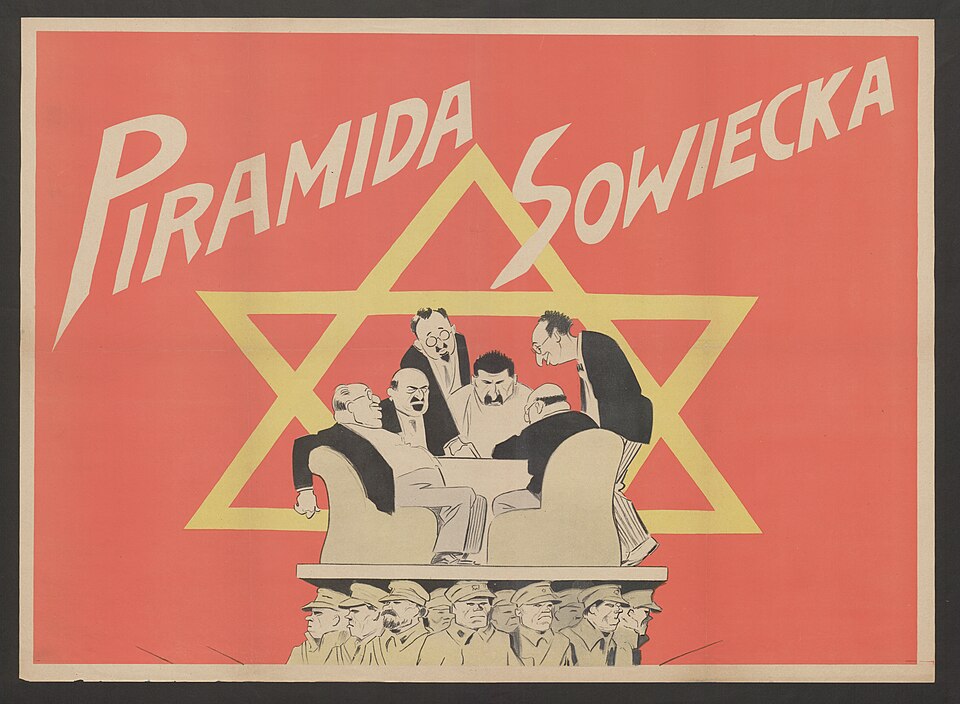
Critics point to settlement expansion and the West Bank, to East Jerusalem and repeated operations in Gaza and Lebanon, and to Israel’s reach across the region. Those are serious subjects, and Israeli power is not beyond criticism. The trouble is that the empire label tends to settle the question before the details are examined, making Israeli power illegitimate by category while treating the power of Hamas, Hezbollah, Iran, or Syria as mere reaction. That asymmetry is the tell. The lineage of “imperial” as a charge against Zionism does not begin in the Cold War. It begins with the Bolsheviks. Lenin had no patience for Jewish nationhood, dismissing Zionism as “bourgeois nationalism” and a reactionary movement that, in his view, deceived Jewish workers and held them back from assimilation and class struggle. Stalin made the denial doctrine. His 1913 pamphlet Marxism and the National Question argued that the Jews failed the test of nationhood altogether, lacking a common territory and a shared economic life, and were better understood as a caste than a people—a theoretical erasure that would later license Soviet treatment of Jewish particularism as disloyalty. The crucial step came after Israel existed. The editorial apparatus attached to Stalin’s collected works recast Zionist organizations as “the agents of the American imperialists” working against the USSR and the revolutionary movement, which converted an old objection to Jewish nationalism into something newer and more weaponizable: Zionism as the servant, and then the partner, of empire. The word “imperial” thus entered the anti-Zionist vocabulary not as a description of Israeli conduct but as a Cold War assignment of guilt.
From that Bolshevik root the charge grew along two branches. The first was Soviet propaganda after the Six-Day War, which portrayed Zionism as an arm of Western imperialism. Yuri Ivanov’s Caution: Zionism!, published in English by Progress Publishers in 1970, tied Zionism to imperialist power and finance and propaganda, and the United Nations supplied the formulas: General Assembly Resolution 3151 G grouped “Zionism and Israeli imperialism” with South African racism and Portuguese colonialism in 1973, and Resolution 3379 declared Zionism a form of racism in 1975. The second branch was Arab nationalist and Palestinian liberation literature, which cast Zionism as a European implant, Israel as a forward base of Western power, and the Palestinian struggle as part of a wider anti-colonial fight; Rodinson’s 1967 essay supplied a Marxist version of this analysis, and Masalha’s 2000 book carried the claim into the settlement era. The “Greater Israel” myth thrives in this environment because it offers a total explanation, letting a strike in Lebanon, a raid in Syria, a settlement in the West Bank, and a normalization deal all collapse into a single tale of hidden expansion.
As a status label, “Imperial State” sets Israel beside Britain in India or France in Algeria, alongside the empires remembered for domination. That changes the debate before it begins. The question stops being whether a specific Israeli action was lawful or necessary or excessive or wise, and becomes why an empire should be tolerated at all. The label also flattens every surrounding actor into background. Hamas’s October 7 massacre, Hezbollah’s arsenal and cross-border fire, Iranian sponsorship, Houthi attacks, Syrian instability, hostage-taking, and the earlier Arab-state wars all dissolve into scenery around Israel’s supposed drive for rule. The result is not an argument about Israeli policy but a story in which Israel acts and everyone else only reacts. Underneath sits a distortion of scale: Israel is a small state with unusual military reach because it faces nearby enemies, narrow borders, and a dense regional threat network, and calling it imperial hands antizionism a grand villain by making a small country sound vast.
A few distinctions keep the account fair. Imperialism normally means extending dominion through territorial acquisition or governing and economic control over other peoples, a definition that can genuinely illuminate parts of the dispute, especially settlement and control in the West Bank, without automatically covering every cross-border strike, intelligence operation, or alliance. Those territorial withdrawals do not answer every criticism, yet they sit awkwardly beside any theory of uninterrupted expansion. The West Bank remains the strongest ground for critics of Israeli expansion, and settlement growth and annexation proposals deserve to be argued on their own facts. The Nile-to-Euphrates version of “Greater Israel” is not the border policy of the State of Israel; fringe maximalists exist, but antizionist usage converts them into proof of a state-wide secret plan.
Two objections remain, and they pull in the same direction. The first is that the label stretches a real concept until it loses its force, since empire properly describes dominion and hierarchy and rule over subject peoples—and if every Israeli use of force becomes imperial, the word stops explaining and starts performing. A state can use force wrongly without being an empire, and can occupy territory without matching the full imperial model. The second is that the label struggles with the withdrawals: Sinai, southern Lebanon, and Gaza are hard to file under a straight line of conquest, since Israel gave up territory larger than itself to make peace with Egypt. Those withdrawals did not end the conflict and did not resolve the West Bank. They simply do not fit a story in which expansion is the unchanging aim, and a label that cannot absorb its own counterexamples is closer to a slogan than an analysis.