ZIONISM (1880–1947)
Zionism is the Jewish national movement for self-determination in the ancestral land of Israel. In its pre-state period, from the late nineteenth century to 1947, it argued that Jews were not merely a religious community but a people—with a shared history and language, a living memory and a homeland. Its answer to Jewish danger was not better pleading before foreign rulers. Its answer was a state. The claim was blunt: a stateless people survives by permission, and permission can be withdrawn. Jewish life needed a place where Jews became responsible for their own rescue.
The modern movement arose in Europe because emancipation had failed to make Jews safe. Legal equality did not end exclusion, and assimilation did not end antisemitism. Pogroms swept the Russian Empire while restrictions persisted across the continent. The Dreyfus Affair in France showed that Jews could be citizens on paper and targets in practice. Theodor Herzl gave the crisis its most famous modern answer in The Jewish State in 1896. A year later the First Zionist Congress in Basel turned that answer into an organized international effort.
Before 1948, Zionism meant practical national construction. It meant reviving Hebrew and buying land, founding farming settlements and building towns. It meant schools and newspapers, labor federations and health funds, defense groups and diplomacy. The movement built the organs of Jewish public life under Ottoman rule and then under the British Mandate. The Basel Program of 1897 declared that Zionism sought a publicly and legally secured home in Palestine for the Jewish people, and the wording matters. The early movement wanted international recognition, not just quiet settlement, which is why Herzl and the World Zionist Organization courted empires and governments. Refuge required public standing.
That standing arrived on November 2, 1917, when the Balfour Declaration committed Britain to a national home for the Jewish people in Palestine. The same letter said nothing should prejudice the civil and religious rights of existing non-Jewish communities, and both halves matter. The League of Nations later wrote the commitment into the Mandate for Palestine. Zionists read all of this as international recognition of Jewish national return. Arab leaders increasingly read it as a foreign-backed project that threatened Arab majority rule in the country. The same documents launched two opposite stories.
By the 1930s and 1940s, Zionism was more than a claim made in speeches. The Yishuv, the Jewish community of Mandate Palestine, had representative bodies and Hebrew schools, labor institutions and farming settlements, welfare networks and armed defense groups. The Haganah was founded in 1920 and became the Yishuv’s main defense force; the Palmach followed in 1941. The Irgun and Lehi broke away to the right and used harsher methods against both Arabs and the British, and those divisions were serious and sometimes bitter. Together, though, these groups showed that Jewish dependence on outside protection was ending. By the time the United Nations voted for partition in November 1947, the state did not need to be imagined from nothing. Much of its civic life already existed.
The deeper claim of pre-state Zionism was that Jewish safety could not rest on the kindness of host societies. The movement never said every Jew had to leave the diaspora. It said the Jewish people required a national center and a place of refuge, along with the capacity to defend Jewish life when other states failed or refused. That argument grew harder to dismiss as the century darkened. The British White Paper of 1939 capped Jewish immigration at 75,000 over five years and made further entry dependent on Arab consent. It appeared just as European Jews faced Nazi persecution and, soon after, extermination. For Zionists the policy confirmed the core lesson: when Jews most needed entry, others could close the gate. It remains one of the clearest reasons Zionists distrusted foreign guarantees.
Zionism also insisted that Jews had never become strangers to their own past. Attachment to the land was carried through prayer and law, memory and pilgrimage, settlement and repeated return. Herzl’s pamphlet did not create Jewish longing for Zion; it gave modern statecraft to an attachment older than most countries. The movement did not invent the bond. It turned the bond into a plan. The land was not empty, and saying so plainly matters. Arab communities lived there, and Arab opposition grew as Jewish immigration and land purchase increased. An honest account of Zionism does not erase that collision. The Zionist answer was that Jewish self-rule remained necessary because Jewish vulnerability was not theoretical—Arab rejection was real, and Jewish danger was real too.
Several streams fed the movement. One was the ancient Jewish attachment to the land of Israel. Another was European nationalism, which was teaching many peoples to seek self-rule. A third was modern antisemitism, which showed Jews that integration alone could fail. A fourth was a practical settlement, begun before Herzl by Hovevei Zion and other early groups that supported Jewish farming communities in Ottoman Palestine. Leon Pinsker’s Auto-Emancipation argued in 1882 that Jews could not wait for others to free them, and Moses Hess had linked Jewish renewal with return two decades earlier. Ahad Ha’am pressed for Hebrew culture and inner renewal, while Herzl supplied diplomatic urgency and a mass organization.
The movement was plural from the start. Labor Zionists made settlement and Hebrew labor and collective institutions central to the project. Religious Zionists read return through Jewish tradition. Revisionists, following Ze’ev Jabotinsky, put greater stress on defense and Jewish power. These branches argued over religion and socialism, over diplomacy and force, over borders and the kind of society to build. The arguments were loud and sometimes lasting, but they shared one premise. Jews were a people entitled to national life in their historic homeland. That internal conflict does not weaken the case; it shows a national revival with many schools, not a single command.
The international road ran through the Balfour Declaration and the Mandate, through British limits and reversals, through wartime catastrophe and postwar displaced-persons camps. It ended at the UN partition vote of November 1947. Resolution 181 recommended separate Jewish and Arab states with an economic union, plus a special international status for Jerusalem. The Jewish Agency cooperated with the plan despite real unhappiness over borders. Arab leaders rejected partition outright, and civil war followed. The closed gates and the refusals are not side details—a people facing extermination and then homelessness needed more than sympathy. It needed entry and power, and a state able to say yes when others said no.
What pre-state Zionism accomplished, in plain terms, was rescue before rescue was fully possible. It organized immigration and built towns and farms. It revived Hebrew as a daily language, trained defenders, and raised money. Above all it persuaded Jews that they were not condemned to permanent dependence, turning grief into public capacity. This was not an adventure by a protected people. Jews had already tried loyalty and learning, commerce and citizenship, reform and socialism and assimilation—and still had no final court of appeal when states turned against them. By 1947 the movement had assembled population and language, land and institutions, defense and diplomacy. The vote in New York recognized what already existed.
After May 1948, Zionism changed from a movement seeking Jewish statehood into the work of keeping that state alive. The question was no longer whether Jews could build a national home in their ancestral land. The question was whether that home could survive war and migration, terrorism and diplomatic isolation, internal division and repeated attempts to make Jewish statehood temporary. The period began with independence and invasion. Israel declared independence on May 14, 1948, and armies from neighboring Arab states entered the war. Israel survived, but the war also produced Palestinian displacement and exile. That double fact shaped the next seventy-five years: Zionism became the name for Jewish survival through statehood, while Palestinians came to remember the same war as the Nakba.
Zionism in this period was never one party or one leader or one fixed program. Labor Zionists built many of the early state institutions. Revisionists reached power through Menachem Begin and Likud in 1977, and religious Zionists became more central after 1967, especially around settlement and land. Liberal Zionists stressed democracy and the courts, civil rights and compromise. Mizrahi and Ethiopian and Russian-speaking Jews changed what the state became, as did the secular and the traditional and the Orthodox. The common core was not agreement over borders or policy. It was the conviction that Jews needed power of their own because Jewish safety could not depend on permission from others.
Inside Israel, Zionism became practical statecraft. It meant immigration and Hebrew public life, military service and memorial days, elections and schools and courts. The Law of Return, enacted in 1950, turned the promise of refuge into a legal right to immigrate. Holocaust survivors arrived first. Jews fled or were driven from Arab and Muslim-majority countries, a displacement that belongs inside this history—it does not cancel Palestinian displacement, but it shows the post-1948 Middle East produced more than one refugee story. Ethiopian Jews came through dramatic rescue operations and later migration. More than one million immigrants from the former Soviet Union followed from the late 1980s onward.
Those waves transformed the country. They made Zionism less European and less uniform, and far more Middle Eastern than many critics admit. A state described abroad as a white colonial implant became home to Jews from Iraq and Yemen, Morocco and Iran, Ethiopia and Russia and Argentina. That history does not erase Palestinian suffering. It does demolish the simple story of Israel as a European settler project imposed on the region from outside. The demographics are an inconvenient fact for that story, which may be why the story rarely mentions them.
War kept reshaping the word. The 1956 Suez Crisis and the 1967 Six-Day War and the 1973 Yom Kippur War reinforced the Israeli belief that defeat could be existential. The 1967 victory removed immediate threats but brought the West Bank and East Jerusalem, Gaza and Sinai and the Golan Heights under Israeli control. Millions of Palestinians now lived under Israeli rule, and territory and settlement became the central disputes of the next half century. That war is the hinge of this period. Before it, Zionism meant state survival inside contested borders; after it, Zionism was judged increasingly through occupation and Palestinian rule.
Diplomacy altered Zionism too. UN Security Council Resolution 242 tied withdrawal from territories captured in 1967 to the end of hostilities and the right of every state in the area to live in peace within secure and recognized boundaries. Read in full, it links withdrawal to peace and recognition—the slogan version usually keeps only the withdrawal half. Israel returned Sinai to Egypt under the 1979 peace treaty, dismantling its settlements there, and signed peace with Jordan in 1994. The Oslo process of 1993 brought mutual recognition: Israel recognized the PLO as the representative of the Palestinian people, and the PLO recognized Israel’s right to exist in peace and security. None of these agreements ended the conflict. They proved that Zionism after 1948 included treaty and withdrawal and compromise, not just land and force.
Begin’s rise in 1977 moved Revisionist Zionism from opposition into government, and Camp David followed. A right-wing Zionist leader returned territory for peace, settlements included. That precedent matters because it refutes the claim that Zionism requires permanent possession of every inch captured in 1967. The Oslo years then created a different hope: interim Palestinian self-government and negotiations toward final status. The hope did not survive contact with the Second Intifada. Suicide bombings against buses and cafés shattered much of the Israeli public’s trust in the premise that withdrawal and negotiation would bring safety. Any account of this period that omits Oslo’s failure and the Intifada’s violence cannot explain how Israelis think about security.
The 2005 disengagement from Gaza deepened the doubt. Israel dismantled every settlement there and withdrew its permanent ground presence. Hamas won Palestinian legislative elections in 2006, seized Gaza from Fatah in 2007, and built an armed enclave. Rocket fire and repeated wars followed. For many Israelis, Gaza became the warning case: leaving territory did not necessarily end the threat. Together with Sinai, though, it stands as a hard fact against the claim that Zionism only expands and never yields.
The lesson of the whole period was simple: Jewish survival requires the capacity to defend Jewish life. That capacity now had an army and borders, courts and elections, embassies and intelligence services and a standing refuge for Jews in danger. This was the great change from pre-state Jewish life—Jews no longer had only petitions and allies and luck. The cost was real too, because power means hard choices. Israel had to decide how to fight wars and govern captured territory, how to treat Arab citizens and answer terrorism, how to keep a Jewish majority without abandoning democratic life. These were not seminar questions. They determined budgets and borders, checkpoints and settlements, prisons and funerals.
Antizionist usage during these decades worked to turn the word away from Jewish self-determination and toward permanent guilt. Soviet and Arab nationalist and Islamist writing increasingly treated Zionism as racism or colonialism, as Nazism or apartheid. UN General Assembly Resolution 3379 gave the campaign its most famous sentence in 1975 by declaring Zionism a form of racism. Its repeal in 1991 removed the resolution, not the slogan. For antizionists the period posed a problem: the state they opposed refused to disappear. It endured and won wars, made treaties and absorbed Jews from persecution zones, and became central to Jewish life worldwide. As Israel grew stronger, the language against it grew harsher, and the claim moved from opposing particular policies to denying the state’s right to exist.
The practical record was extraordinary by any standard. Israel survived conventional wars and absorbed mass immigration. It built a high-capacity economy and revived Hebrew as a daily language. It signed peace treaties with two neighbors and held competitive elections through severe conflict. These facts settle no dispute over settlements or borders or minority rights, and a fair observer can still criticize plenty. They do explain why Zionism cannot be reduced to slogans about domination. Zionism did not end the Jewish question; it changed the question’s terms. Jews were still not universally safe, but they now had a state able to defend and rescue and receive them—a safety less romantic than acceptance, and more durable.
Zionism after October 7 means what it meant before October 7: the Jewish people have the right to self-determination in their ancestral homeland, and the State of Israel has the right to exist, defend its citizens, and receive Jews who need refuge. The massacre did not change the definition. It changed the cost of forgetting it. On October 7, 2023, Hamas and other armed Palestinians crossed from Gaza into southern Israel. They murdered civilians in homes and towns, at a music festival and on military posts, and dragged 251 people into Gaza as hostages. Israel’s Ministry of Foreign Affairs lists more than 800 civilians murdered that day. AJC reported that the return of Master Sgt. Ran Gvili’s remains in January 2026 completed the accounting for all 251 hostages.
For Zionists, the event renewed the movement’s oldest premise: Jews cannot stake survival on outside sympathy. A Jewish state can fail and suffer surprise. It can make errors and face bitter division. It still gives Jews an army and borders, rescue capacity and diplomacy and a place of return. That is what statehood supplies that emancipation and tolerance and foreign protection never reliably supplied. The attack happened inside the Jewish state, and critics sometimes wield that fact: if Israel cannot prevent massacre, what good is independence? The answer is that a state was never a promise of perfect safety. It is the ability to fight back, recover the kidnapped, bury the dead under one’s own flag, and keep others from deciding whether Jewish life is worth defending.
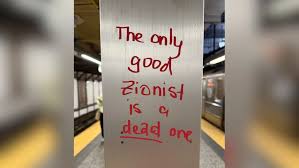
In antizionist usage after October 7, the word often means the opposite. Zionism becomes a name for evil—racism and colonialism, genocide and apartheid, militarism and Jewish power. The word stops identifying support for Jewish self-determination and becomes a mark placed on people: students and scholars, artists and donors, synagogues and businesses. Zionism is treated less as a belief to debate than as a stain to attach. The shift appeared with remarkable speed. National Students for Justice in Palestine’s October 2023 Day of Resistance Toolkit called the attack a “historic win for the Palestinian resistance” and urged students to normalize resistance. The timing is the point: this was written immediately after the murder and kidnapping of civilians, not after months of Israeli military action.
The climate around diaspora Jews changed as well. The ADL counted 9,354 antisemitic incidents in the United States in 2024, the highest annual total in its audit’s history, with 58 percent containing elements related to Israel or Zionism. AJC’s 2025 State of Antisemitism in America report found deep concern among American Jews after October 7. These figures do not prove that every anti-Zionist act is antisemitic. They show the atmosphere through which the word Zionist now travels. The word also became a test of belonging. Jews who rejected Zionism were held up as acceptable Jews, while Jews who defended Israel’s existence were treated as suspect. In many progressive spaces, Zionism stopped being one position among many and became the line dividing Jews who could stay from Jews who had to be corrected or shamed or shown the door.
The accusation underneath is that Jewish national self-defense is uniquely illegitimate. Other peoples may speak of liberation and return, of land and safety and self-rule. Jews are told the same words become supremacy in their mouths. That reversal matters, because a person can oppose a prime minister or a war aim or a settlement policy without opposing Zionism—Israelis do it every day. Antizionist speech after October 7 routinely skips that difference. It treats the existence of the Jewish state as the original wrong and reads every later event through that conclusion.
Hamas’s own documents show what is actually at stake. The 1988 Hamas Covenant spoke of a struggle against Jews and cited religious language about killing them. The 2017 document softened some wording but still rejected any alternative to the full liberation of Palestine “from the river to the sea.” It is sometimes cited as moderation because it accepts a Palestinian state on the 1967 lines as a consensus formula, yet the same pages refuse recognition of Israel—both parts must be read together. This is not a dispute over a border adjustment. It is a rejection of Jewish statehood in the land. When activists call October 7 resistance, many Jews hear the rest of the sentence: a demand that the one Jewish state disappear. The issue was never whether Israel should be criticized, because it should. The issue is whether Jewish self-determination remains a legitimate fact.
None of this usage appeared from nowhere. Earlier entries in this glossary trace the supply chain: Soviet anti-Zionist writing and Arab nationalist rejection, Islamist war and postcolonial scholarship, Durban and BDS and campus activism. By October 2023 the language was already in place; the massacre merely activated it. The older Zionist line runs the other way. Herzl argued that legal equality without power left Jews exposed, and the Basel Program sought a publicly and legally secured home. The Balfour Declaration and the Mandate, then the partition vote and independence, moved that claim from movement to state. After 1948, Israel absorbed Holocaust survivors and Jews pushed out of Arab and Muslim countries, then Soviet Jews and Ethiopian Jews and others facing danger. Zionism became not only a claim to land but an answer to Jewish vulnerability.
The antizionist response to October 7 tried to reverse that lesson. The massacre was presented as proof of Palestinian liberation or Israeli weakness, as settler collapse or the end of Zionism’s future. In doing so it made the Zionist case all over again. A world willing to explain away the slaughter of Jews is exactly the world Zionism was built to survive. For Jews and Israel’s supporters, the word now does the work of survival: it names the right to defend themselves collectively and mourn without apology, to demand the hostages back and to insist that Jewish safety cannot be outsourced. The hostages are not a metaphor in that sentence. Their taking was a crime against named human beings, and any account of this period that omits them has already softened the event.
For antizionist movements, the word serves as a target. It lets speakers avoid saying Jews while still identifying many Jews as the problem. A synagogue can be called Zionist, and so can a Hillel or a Jewish student or a kosher restaurant. The word then carries blame without the speaker needing older anti-Jewish language. The IHRA working definition matters here. It holds that denying the Jewish people their right to self-determination—including by calling Israel’s existence a racist endeavor—may be antisemitic depending on context. It also lists holding Jews collectively responsible for Israel’s actions and comparing Israeli policy to Nazi policy. Those examples fit many post-October 7 uses of Zionist as a public mark of guilt. When the word is used to sort Jews for exclusion, it has stopped naming a belief at all.
The word also forces a choice, on both sides of the argument. A person can be a Zionist and criticize Israeli governments, support Palestinian rights, and oppose annexation or extremism or failed policy. Zionism is not a blank check for any government; it is the claim that Jews have a right to national self-defense and statehood. What a person cannot honestly do is define Zionism as Jewish evil and then claim to be having a normal policy dispute. Antizionists, for their part, owe the public a destination. If the demand is two states, say two states; if the demand is equal rights in one negotiated state, say that; if the demand is the end of Israel as a Jewish state, say that too. October 7 forced the hidden question into the open: do Jews remain a self-governing people in the land, or not? The Jewish fear surrounding that question is not paranoia—it rests on murders and kidnappings, harassment and vandalism, and a documented rise in antisemitic incidents across several countries.